

Ted’s Latest Book
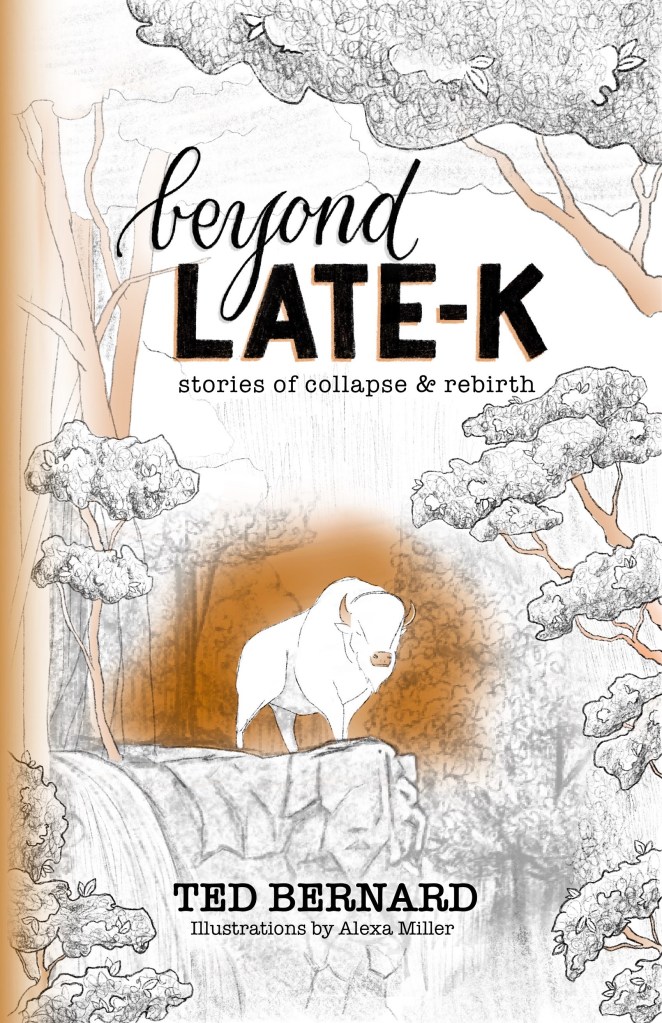
Beyond Late-K
Stories of collapse and rebirth
In the not-too-distant future, up and down the Ohio Valley, people struggle in a post-apocalyptic landscape to sustain their families and communities. Though they seek resilience and are collaborative, the relationships are fraught with heartache and pain.
In his second novel, Beyond Late-K: Stories of collapse and rebirth, Ted Bernard combines ten stories in an exploration of a world beyond collapse. This is a world without modern technology, a world where survivors must strive to be hopeful and productive even though they are fallible.
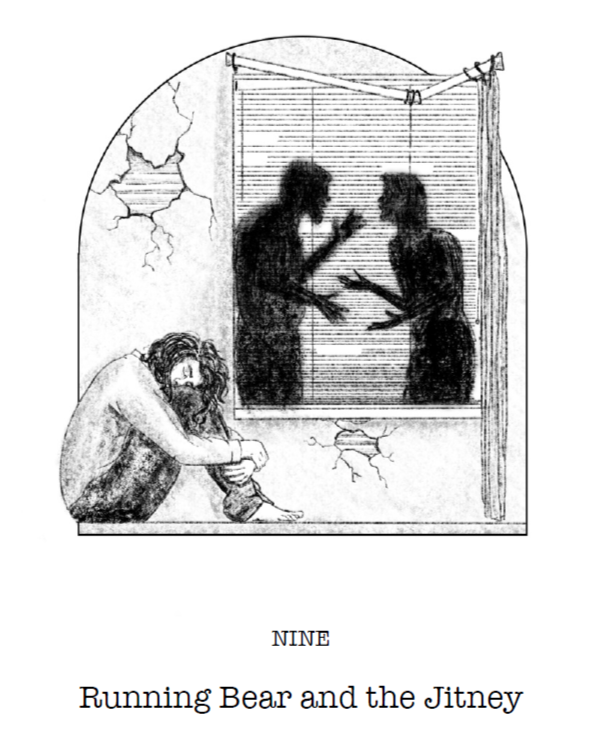
The book is beautifully illustrated by Alexa Miller and includes maps of the post-collapse world. Click on her illustrations to read samples from several chapters.
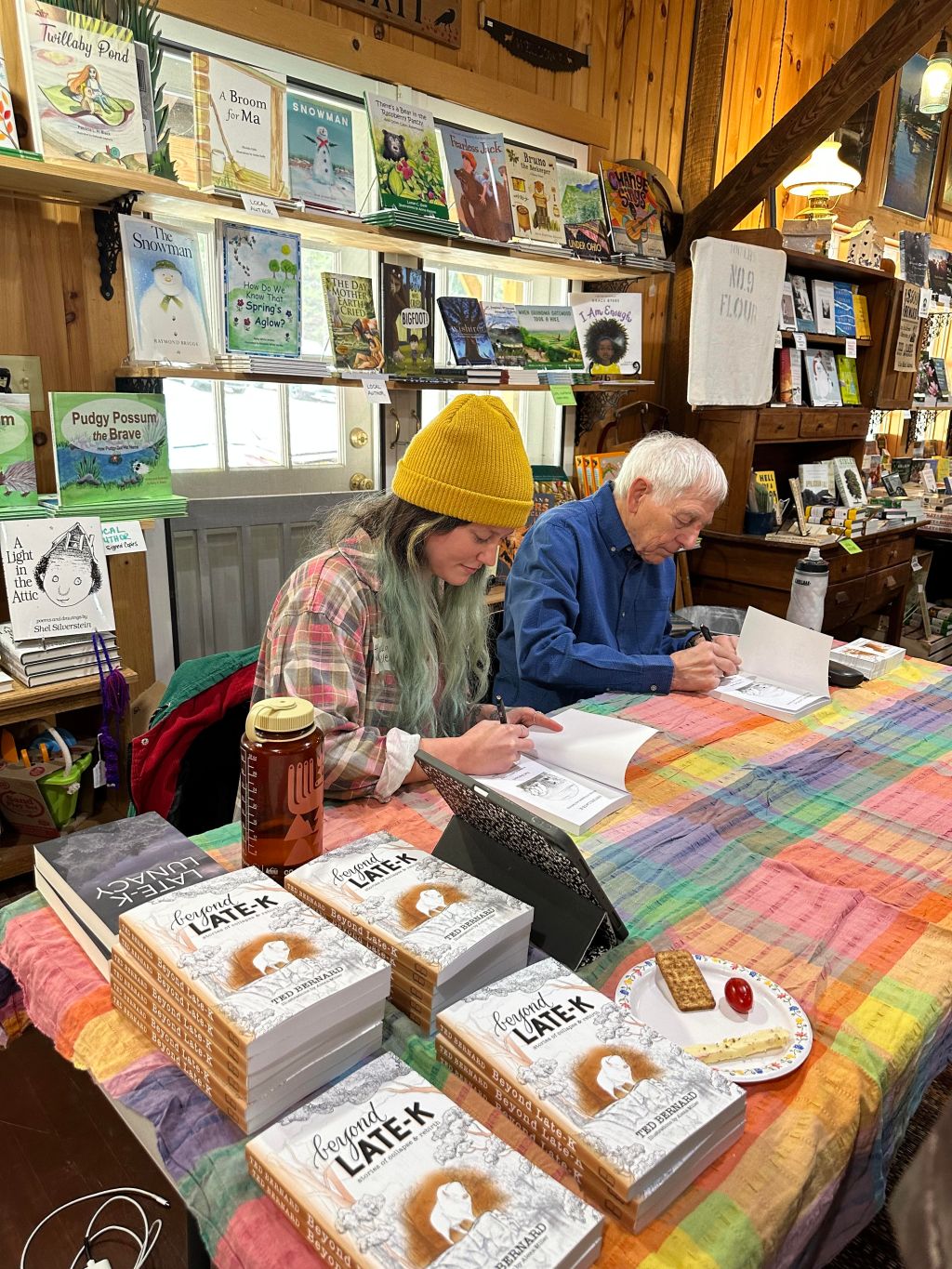
Copies are available through Petra Books, White’s Mill, Little Professor, and Amazon.


What people are saying about Beyond Late-K
Picking up where his novel Lake-K Lunacy left off, here is a candid exploration of how various characters in the future cope with the ‘harsh simplicity’ of a world decimated by ecological disaster and climate change, global pandemics, and social collapse, nuclear destruction and even ubiquitous infertility as they try to maintain their humanity–a challenge we might all have to face in the all-too-near future. We need good-hearted visionaries like Ted Bernard–a passionate expert in sustainability–to show us the way and inspire hope that we, too, can not only survive but also create a better world respectful of all life.
— Kathleen Davis, author of Sacred Groves: Or, How a Cemetery Saved My Soul
I love how Bernard’s stories take us to a future that feels like the past. The world has indeed fallen apart, and the characters in Beyond Late-K must live, like our forebears, with no cars, electricity, telephones or internet. There are troubles galore, but it all feels like a possible, even likely future. From the perspective of a new and difficult world we gaze back at ‘the pointless materialism, the folly of permanence.’ What a hard-biting and fascinating book.
— John Thorndike, author of The World Against Her Skin and A Hundred Fires in Cuba
A main message that I take from this book is that after we lose all our material possessions, the environment is degraded, and our health is difficult to maintain, what we have left are relationships. The sustainability of rewarding and good relationships might be the one thing that saves us from a dystopian future.
— Michele Morrone, author of Ailing in Place: Environmental and Health Disparities in Appalachia
For those of you who are new to Late-K Lunacy and Beyond Late-K: Stories of Collapse and Rebirth, you are in for a treat. They are part of a genre of books we might call post-apocalyptic fiction for the thinking person. You won’t find zombies here or strange new species spawned by dangerous levels of nuclear radiation. No alien creatures or sinister characters bent on world domination either. Instead, we have humans just like us. Humans who have inherited the world of generations past. Humans who are suffering the consequences of their own decisions and failings. Humans who saw it coming but did nothing to change course.
— Geoff Buckley, co-editor of The American Environment Revisited: Environmental Historical Geographies of the United States.
Updates from Ted



Join the list
Be the first to know about upcoming events.


 Author Ted Bernard